Smart Banking for
New‑Age Bankers
What Smart Banking Means
Smart banking represents the integration of technology,
data, and human engagement to deliver efficient, secure, and customer‑centric
financial services. It goes beyond digitisation to create intelligent,
responsive, and personalised banking experiences.
1. Technology‑Enabled Banking
Modern bankers are expected to effectively leverage
technology across operations and customer engagement, including:
- Digital
platforms and omni‑channel delivery
- FinTech
partnerships and open banking models
- Automation,
artificial intelligence, analytics, and cybersecurity awareness
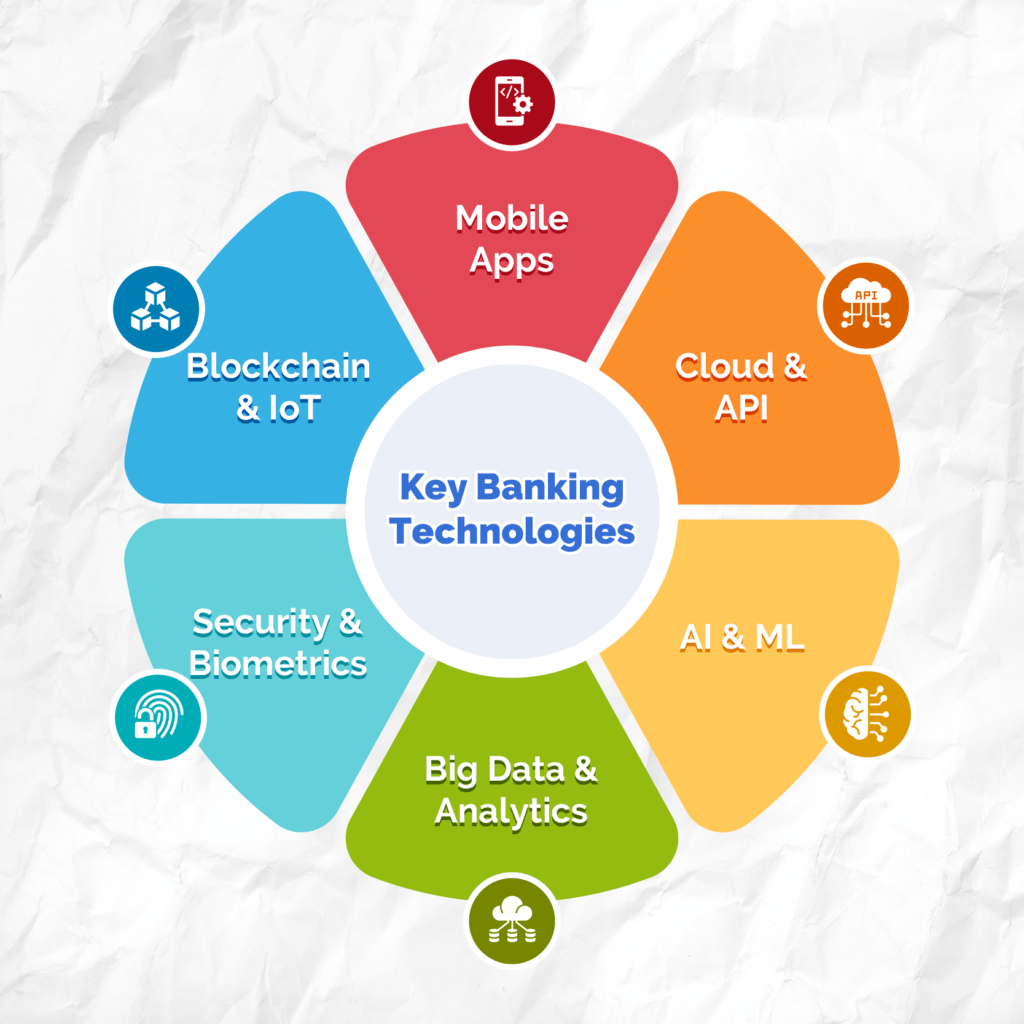
Key technologies shaping banking and financial services
include:
- Augmented
Reality
- Blockchain
- Robotic
Process Automation (RPA)
- Quantum
Computing
- Artificial
Intelligence
- API
Platforms
- Prescriptive
Security
- Hybrid
Cloud
- Instant
Payments
- Smart
Machines
These developments are comprehensively
discussed in Technology in Banking.docx, which outlines how innovation
and FinTech competition are transforming banking models and customer
expectations. [Smart
Bank...Bankers 1 | Word]
Overview of Key Technologies
- Augmented
Reality (AR): Still at an early stage, AR has the potential to
redefine customer interactions and enable hybrid or branch‑less banking
models.
- Blockchain:
Distributed ledger technology enables secure, immutable, and shared
records. Banks are exploring applications in clearing and settlement, KYC,
trade finance, syndicated loans, and payments, with the potential to
convert KYC from a cost centre into a revenue opportunity.
- Robotic
Process Automation (RPA): By combining machine learning, natural
language processing, and analytics, RPA enables faster, scalable, and more
accurate processing of large volumes of structured and unstructured data.
- Quantum
Computing: While commercial adoption is still distant, quantum
computing promises exponential improvements in processing power. Global
banks are investing in research to prepare for future applications.
- Artificial
Intelligence (AI): AI enables data‑driven decision‑making across
operations, risk management, compliance, marketing, and customer service.
It allows banks to move from mass products to personalised offerings,
enhancing customer retention and experience.
- API
Platforms: APIs decouple front‑end experiences from core systems,
enabling new business models, faster innovation, and collaboration with
third‑party partners.
- Prescriptive
Security: Advanced analytics are used to predict and mitigate cyber
threats proactively, addressing the evolving nature of cyber risk.
- Hybrid
Cloud: A hybrid cloud model provides agility, scalability, and cost
efficiency while ensuring data security, governance, and regulatory
compliance.
- Instant
Payments: Real‑time payments have become essential in a less‑cash
economy. Indian banks are collaborating with FinTechs to enhance UPI‑based
and digital payment solutions.
- Smart
Machines: Virtual assistants and voice‑enabled technologies are
emerging as digital concierges, improving customer engagement and service
accessibility.
Collectively, these technologies require banks to treat
technology as a core organisational competency, embedded across
functions rather than confined to IT teams. The primary objective of technology
adoption must remain enhancing customer experience, with revenue and
cost efficiencies following naturally.
2. Customer‑Centric and Data‑Driven Approach
Smart banking is intelligent and personalised, not merely
digital. It emphasises:
- Data‑driven
credit and risk decisions
- Integration
of analytics with branch‑level customer insights
- Seamless
blending of digital channels and human interaction
The reform agenda outlined in Banking Reforms – EASE.docx
reinforces the importance of technology‑enabled banking while maintaining
strong customer relationships and local engagement.
3. New‑Age Banker Skill Set
A new‑age banker is expected to:
- Demonstrate
digital literacy across payments, digital lending, and FinTech models
- Understand
regulatory changes and RBI digital initiatives
- Adapt
quickly to emerging models such as neo‑banks, blockchain‑based trade
finance, and digital banking units
These expectations are consistently highlighted across
multiple editions of Bankers’ Weekly publications. [Bankers
We...y 25092022 | PDF], [Bankers
We...y 01052022 | PDF]
4. Smart Banking in the Indian Context
Retail Banking in India.docx provides the foundation
for understanding the evolution of Indian banking and underscores why technology‑led,
retail‑focused, and customer‑centric banking is now essential for
sustainable growth.
Conclusion
The future of banking lies in collaboration rather than
competition with FinTech firms. Banks that build robust platforms, own
customer relationships, and integrate global FinTech capabilities will be best
positioned to deliver superior value and long‑term customer satisfaction.


No comments:
Post a Comment